Black History Month: from legacy to leadership

This Black History Month, PSAC honours the leadership, resilience and organizing power of Black workers who have shaped Canada’s labour movement and continue to lead the fight for justice today. This year, PSAC’s theme is “Black Voices: Bold Futures – From Legacy to Leadership.” This is a call to recognize the legacy of resistance that has shaped our unions and to center the voices that are charting a bold path forward. 

Historically, many Black workers have fought for fair workplaces and spoken out against racism and discrimination, including during strikes and other human rights fights, earning an important seat at decision-making tables.  

Activists and leaders like Stanley Grizzle and Bromley Armstrong pushed unions and governments to stop racist practices and helped shape what unions bargain for and what they fight for. From the days of railway porters to today, their work helped and continues to achieve a strong base for fair work and anti-racism policies at work. 

The United Nations has launched a new International Decade for People of African Descent (2025–2034), focused on supporting Black communities, breaking down systemic barriers and lifting Black voices in Canada and around the world. Canada has pledged to continue this work until 2028 and is also taking part in this second decade. 

Black members lead allyship and equity work 

Black members are showing what allyship looks like in practice, including at PSAC’s 2025 National Women’s Conference where Black women delegates championed and supported key resolutions to expand domestic violence training, improve access to health care for Indigenous women. Members at the conference unanimously voted in favour of a resolution to formally recognize the contributions of Black women workers.   

Together, with other equity groups, Black members are shaping union policy and bargaining priorities in ways that offer a model for the wider labour movement on how to live up to equity commitments through both words and concrete action.  

At the same time, these past and current achievements don’t erase what Black workers are still facing in Canada’s public service. Black workers continue to deal with lower pay, less access to training, mentorship and chances to grow in their careers, and they deal with employers who ignore or fail to stop anti-Black racism at work. 

We cannot ignore how this year’s federal budget cuts are hurting equity groups, including Black and other racialized workers who are already underrepresented in the federal public service. 

Taking action on anti-Black racism 

This is precisely why PSAC’s ongoing work to center Black voices in our union is so important. We are building on years of organizing, creating space for members to come together, organize, and speak up about the issues that affect them. PSAC’s Black caucus is member-led groups where Black members share experiences, build leadership, and organize around issues like anti-Black racism at work and within the union. 

Our racial justice work also goes beyond our internal union work. We have filed a human rights complaint with the Canadian Human Rights Commission on behalf of all Black federal public service workers, and several other grievances to challenge anti-Black racism. We are pushing employers to fix unfair practices, and are demanding equal access to training, mentoring and career growth for Black workers.  

We are calling on the federal government to settle the human rights complaint to make Black federal workers whole, implement the recommendations of the Taskforce on the Employment Equity Act Review including making Black workers a separate employment equity group, and work with unions and equity groups before making any policy changes that put workers and their communities at risk. The future of Canada’s public service depends on equity, inclusion, and the leadership of those who have long been on the front lines of the fight for justice. 

This is how you can help: 

  • Learn the history of Black people in Canada, including the struggles and victories that have shaped our workplaces and unions. 
  • Challenge anti-Black racism and all forms of discrimination in your workplace, local and community. 
  • Support and amplify Black voices in meetings, bargaining, campaigns, and leadership spaces. 

Source: PSAC

Human Rights Day 2025: Our Everyday Essentials

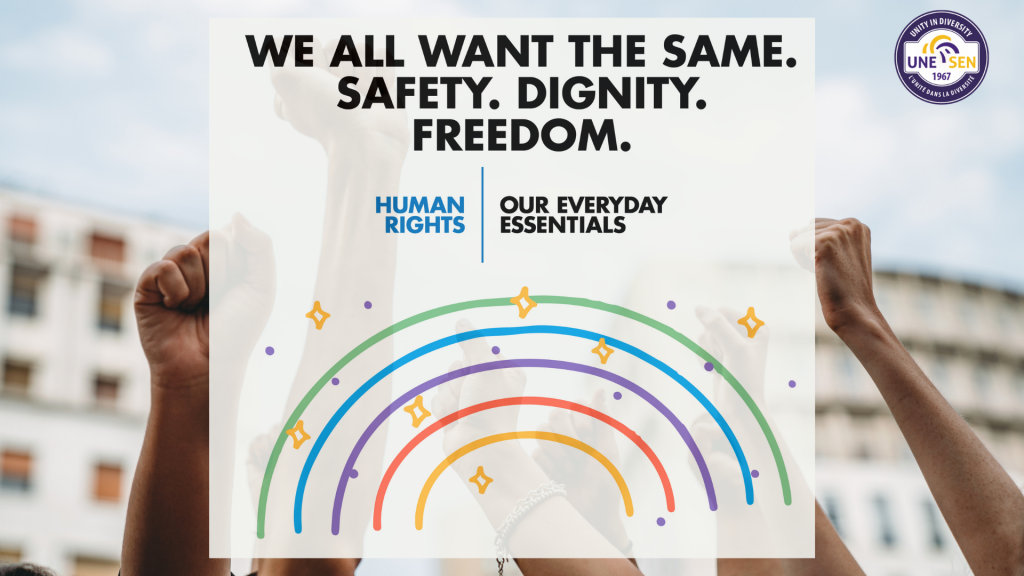
Images of people fists up in the air with the sky as background and the words: we all want the same. Safety. Dignity. Freedom. Human Rights, our everyday essentials.

Every December 10, Human Rights Day commemorates the adoption of the Universal Declaration of Human Rights (UDHR).

In 2025, the United Nations highlights the theme “Human Rights: Our Everyday Essentials.” This theme highlights a simple truth: human rights are not theoretical. They are what make it possible to live and work with dignity, safety, and fairness — every day.

For the labour movement, human rights take very concrete forms:
• the right to work in a safe environment, free from harassment and violence;
• the right to employment equity, particularly for persons with disabilities, women, racialized workers, and members of marginalized groups;
• the right to decent work, fair wages, and working conditions that respect human dignity.

For UNE, defending human rights means defending workers in their day-to-day reality — in workplaces, staffing processes, and access to real opportunities.

Human rights are also fundamental freedoms:
• the freedom to go for a run without fear for your safety;
• the opportunity for a person with a disability to access employment without systemic barriers or discrimination;
• the right for every individual to be recognized, respected, and protected, regardless of identity or circumstance.

These realities extend beyond the private sphere. They are reflected in employment policies, management practices, workplace accessibility, and organizational culture.

When rights are weakened, workers are often the first affected through discrimination, exclusion, and insecurity. When rights are protected, workplaces become fairer, more inclusive, and more humane.

Governments have the legal responsibility to respect human rights, but their practical application also depends on collective vigilance. Unions play a central role in ensuring that these rights are not merely theoretical, but real and enforceable in working life.

On Human Rights Day, UNE reaffirms that human rights are inseparable from workers’ rights. They form the foundation of decent, safe, and equitable work — now and in the future.

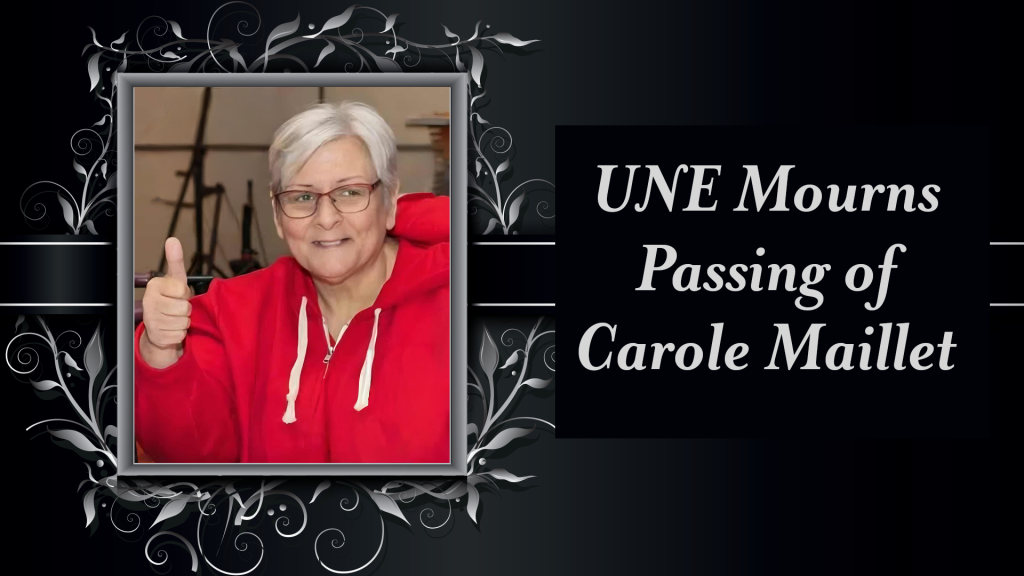
UNE Mourns Passing of Carole Maillet

The Union of National Employees mourns the passing of our sister, Carole Maillet, who passed away in Montréal on Friday, October 24, 2025, at the age of 63.

Carole served with great dedication as the Regional Vice-President for the Quebec Region, and previously as Assistant Regional Vice-President, Regional Human Rights Representative, and Local President. Her lifelong commitment to union activism, social justice, and equity inspired everyone around her.

Carole’s warmth, compassion, and contagious smile could light up any room. She led with both strength and heart, and her love for people shone through in everything she did. She was also deeply proud of her involvement in the Francophone Committee, where her passion for language and culture brought members together.

We extend our deepest condolences to her family, friends, and loved ones. Carole will be deeply missed and fondly remembered.

National Acadian Day

By Mireille Jaillet

Acadians, early 17th century French settlers who founded Acadia (now known as Nova-Scotia, New Brunswick and Prince Edward Island), are often known as the “Neutral French” due to their refusal to take sides during the French-English conflicts. The Acadian people were generally known as being friendly to everyone and sought allyship with all rather than allegiance to one.

Once Acadia was ceded to Britain, the Acadians became the subjects of the “Great Upheaval.”  They were removed from their homes and deported to Britain as well as various French settlements and British colonies. Some who settled in Louisiana formed their own distinct cultural identity as Cajuns after adapting to their new environment. Of the ten thousand expulsed Acadians, approximately half lost theirs lives.

Over time, some Acadians were allowed to return to Acadia after agreeing to the contentious oath of allegiance, but not to their original dwellings as those had been gifted to American Loyalists, especially New England planters. Most Acadians who returned had either escaped deportation by finding refuge in the forests or had been prisoners held in Beauséjour, Pigiguit, Port-Royal and Halifax and had finally been released.

The Acadians had close relationships and ties with both the French and Indigenous peoples. The very reason they refused to take the unconditional oath of allegiance in the first place. Upon their arrival to the new colony, the new French colonists were assisted by the Mi’kmaq with food and other resources and the two groups remained close. They shared the territory and resources and worked together efficiently and harmoniously. The Acadians traded tools and goods with the Mi’kmaq for fur, fish, and other resources.

The Acadians never made any effort to displace the Mi’kmaq. However, once Britain seized Acadia, the relationship between the two became strained due to the pressures placed upon both by the British. It did not, however, deter them from working together to resist the British rule and attempts at assimilation.

After the deportation, the Acadians and Mi’kmaq continued to work together to preserve their cultures, to promote reconciliation and to address the historical injustices of colonialism. Some Acadians and Mi’kmaq formed families with each other, creating what is known as the Acadian Métis. We can also see Indigenous practices, terms and values that were incorporated into the Acadian culture and language. Some examples of this in terms of language:

FrenchMi’kmaqEnglish
MatelotMatlotSailor
AdieuAtiyu/atiuBye
L’assietteLasiyet/lasietPlate
Ma pocheMapospocket
NoelNuwelChristmas
  SHARED VALUES  
Democratic practicesCommunity well-beingDesire for peace
Importance of Oral TraditionsImportance of Music, Dance, and drumsHarnessing of natural medicines

Mireille Jaillet is the UNE National Equity Representative for Women.

UNE Statement on Emancipation Day – August 1, 2025

On this Emancipation Day, the Union of National Employees (UNE) honours the strength, resistance, and enduring legacy of those who fought for the abolition of slavery across the British Empire, which legally came into effect on August 1, 1834.

We recognize that while emancipation marked a legal end to slavery, the deep-rooted impacts of colonialism, anti-Black racism, and systemic inequality persist to this day. As union members, we reaffirm our commitment to justice, equity, and dignity for all workers, especially Black workers who continue to face barriers in the workplace and in society.

UNE stands in solidarity with the Black community in the ongoing fight for true liberation, fair representation, and reparative justice. Emancipation is not a moment in history; it is a call to action. Together, we must dismantle the structures of oppression and build systems rooted in accountability, healing, and radical hope.

We invite all UNE members to take time to reflect, educate, and engage in actions that honour this day and push forward the work of liberation.

Largest federal public service union files sweeping human rights complaint over anti-Black racism in Canada’s public service

PSAC has filed a sweeping human rights complaint with the Canadian Human Rights Commission on behalf of all Black PSAC members employed in the federal public service. The complaint challenges decades of systemic discrimination, racist comments, microaggressions, and policies and practices that have unjustly blocked Black workers from career advancement. 

“For decades, Black federal public service workers have endured racism at work, been shut out of job opportunities, and denied the safe workplace they deserve,” said Sharon DeSousa, PSAC National President. “Instead of fixing the problem, the government fought Black workers in court hoping it would all just go away. We won’t back down until the government is held accountable and our members get the justice they deserve.” 

The complaint details the federal government’s longstanding failure to address anti-Black racism in its workplaces, including: 

  • Racist comments, microaggressions and discriminatory behaviour; 
  • Heightened scrutiny and disproportionate discipline; 
  • Dismissal or downplaying of discrimination and harassment complaints; 
  • Barriers to hiring and promotion; 
  • Unequal access to training, mentorship, and career development; 
  • A failure to address anti-Black racism and bias in staffing processes. 

This filing follows the recent dismissal of the Black Class Action lawsuit, which the federal government fought vehemently against to deny its certification despite its own admission that systemic anti-Black racism exists in its workplace and across Canada. PSAC backed the legal action by providing financial and legal support and publicly advocating for the government to settle the case. 

The federal government has spent more than $10 million in legal costs to prevent the certification of the Black Class Action lawsuit. 

Through PSAC’s litigation, the union will seek systemic remedies to eliminate anti-Black racism in federal workplaces as well as damages to make members whole for the harm they have experienced. PSAC is calling for meaningful changes to hiring and promotion policies and practices, stronger accountability measures, and an end to the discriminatory practices that have harmed generations of Black federal public service workers and their families. 

“Black workers have suffered economic and psychological harm for decades — and they deserve real, lasting change,” added DeSousa. “It’s time for the government to own up to their mistakes and fix what’s clearly broken.” 

As Canada’s largest federal public service union and the bargaining agent for over 245,000 workers across the country, including 185,000 federal public service workers, PSAC is uniquely positioned to identify and challenge discriminatory practices affecting Black federal workers. This complaint is a critical step in the fight for justice and part of the union’s broader commitment to confronting anti-Black racism in and out of the workplace. 

They are coming home…

By Mireille Jaillet

Rebecca Contois. Mashkode Bizhiki’ikwe.  Marcedes Myran.  Morgan Beatrice Harris.

Taking a moment to reflect.  Taking a long moment of silence for these women.  One by one, found among garbage. Discarded by a coward.  A weak man who thought that they were easy prey, and he wasn’t entirely wrong.  He, however, underestimated the determination of their families whose resilience was built into their very DNA.

On International Women’s Day, I received the news that on February 26th, 2025, the remains of both Morgan Harris and Mercedes Myran (the last two victims of the 2022 Winnipeg serial killer) had been located after months of searching and years of battles with local and federal authorities to initiate the search. 

The moment my eyes read the article posted on the Manitoba news site, Prairie Green Landfill Search Bulletin #4 confirming the discovery of remains identified as Morgan Harris and Mercedes Myran, they burned with tears and my chest grew tight.  Not because I knew the women in question but because I knew of the void that had been left behind when she was lost and of the grieving families and communities that were deeply impacted.  There was an ache in my heart when remembering how hard these families fought, how they refused to give up, knowing deep in their bones that they could and would find her if only given the chance and they were met with obstacles, disbelief and condescension.

Their resilience remained and it paid off.  A tragic victory.  

The mission, initiated by the Manitoba government at the request of the families of Morgan Harris and Marcedes Myran, was operated in conjunction with the Assembly of Manitoba Chiefs and with support from the Federal Government.

“They” said it couldn’t be done.  “They” said it wasn’t worth the risk.   “They” were wrong.

These lost women coming home will bring healing to countless many.  Not only the family members who felt that loss like a festering wound but for those who were never able to get such closure.  And for women who fear a same fate.  It is a step forward in valuing human beings over capitalism.  One step closer to honouring life instead of money and bureaucracy.  If any lesson is learned from this.  It should be that finding these remains is enough justification for a continued search of the landfills.  Resources must be provided to support these searches so that the process becomes easier, less cumbersome and with more skilled efforts.

As for our society, I hope this removes barriers in similar searches around the country.  MMIW must be recognized and valued.  All those missing and murdered should be recognized and valued, searched for and hopefully found. 

To the families who fought hard to get not only justice for Morgan and Marcedes but also peace:  we are so very proud of you, and we are inspired by you.  May you find comfort and healing.

To Marcedes and Morgan, welcome home.

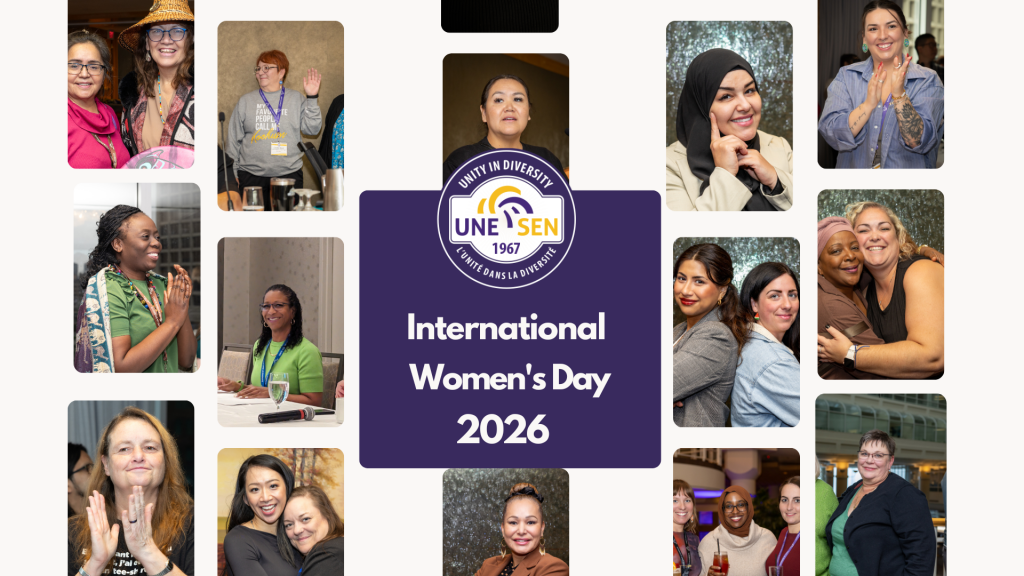
International Women’s Day

By Mireille Jaillet

We dream of a world where differences are valued and celebrated
Not because of gender, or race, or class, or challenges
But for our uniqueness, integrity, and qualities contributed
Where people can thrive and meet their full potentials.

On March 8th,  International Women’s Day is over a century old.
Still too many things we can’t do, stigmas weighing us down
A mountain of barriers, challenges and stories to be told.
And as the fight continues, one by one we become unbound.

We see freedoms taken away in the world’s most “democratic” countries.
Women slain, and children orphaned because of outdated beliefs and values.
Or forced on their knees pleading:  Remember Please!
That this day is not only for us but for all those who celebrate women and their virtues. 

We are speaking of our mothers, sisters, aunts and daughters
Our aunts, teachers, friends and mentors,
We speak of all those women who truly matters.
Together we can tear the barriers down, and finally enjoy this word’s splendours.

Mireille Jaillet is the UNE’s National Equity Representative for Women

Black History Month – Hurt People, Hurt People: My Journey from Apartheid South Africa to Healing Through Activism

Growing up in apartheid South Africa, I did not recognize that I was a victim of discrimination. As a racialized person, I believed what I was taught in school and told by society: that European settlers had brought civilization to South Africa in 1652. In fact, this was the first line in my history textbook. I accepted that I belonged to an inferior race, that I deserved to be segregated from white people, and that I lacked the intellectual capacity to study in the “Whites Only” institutions. I did not question why I could never aspire to jobs reserved for white South Africans. This was my reality, and it felt normal—until my world was turned upside down by a simple vacation.

At the age of twelve, my father took us to Canada for a holiday. It was my first experience outside South Africa and my first time in a country without apartheid. I was excited to see snow, to taste pizza and burgers, to do things that I only saw in the movies, but what fascinated me most was how friendly people were. For the first time, a white person smiled and greeted me. I was so afraid that I didn’t know how to react. I had my first real conversation with a white teenager and quickly realized that I was not inferior. For the first time in my life, I felt what it was like to be treated as a normal human being.

Returning to South Africa, I was a different person. I now saw and felt the weight of discrimination more than ever before. I was angry and hurt. I began recognizing every little injustice I endured and questioning it. I questioned why I wasn’t allowed to eat in certain restaurants, why the best beaches were classified as “Whites Only,” and why I had to walk for kilometers to get to a “Non-White” public transit route that could not enter the downtown core where “Whites Only” busses were allowed to enter?

As I grew older, I started questioning the broader injustices of apartheid. Why were non-whites limited to certain jobs? Why was I not allowed to run for public office or vote? Why would I be imprisoned simply for asking these questions? My brief exposure to life in Canada had made living in South Africa much more difficult. But it had also ignited a passion for human rights within me. I knew that if I wanted to advocate for justice without the constant threat of imprisonment, I had to return to Canada.

When I finally moved back to Canada, I felt a sense of freedom that is difficult to describe. My mind was free from the shackles of apartheid. I could now speak openly about the atrocities of apartheid without fear. At first, sharing my experiences felt cathartic, but over time, it became frustrating. I was invited to talk at high schools, universities and even at faculty dinner parties. People listened, but did not want to act. It felt like my pain had become a form of entertainment for them, and that hurt me deeply. That hurt made me more confrontational, and I soon found myself in heated arguments with those who downplayed apartheid, comparing it to other global atrocities. This conflict extended to my family and friends, who eventually encouraged me to seek counseling.

Counseling was a revelation. After recounting the traumas I had endured, I was diagnosed with Post-Traumatic Stress Disorder (PTSD). It was then that I truly understood the phrase, “Hurt people, hurt people.” My unresolved pain had led me to lash out at those who cared about me. I knew I had to find a way to channel my hurt into something constructive, something that would help me stop hurting others—and myself.

That was when I found healing through service. I became involved in volunteer work, helping refugees in Canada adjust to their new lives. I counseled them by sharing my experiences and how I overcame my trauma. Additionally, I took on a more active role in advocacy, serving as a National Human Rights Officer for racialized members in the Union of National Employees. By helping others navigate the trauma of discrimination, I found the strength to heal my own wounds.

Today, I continue to fight for justice, not out of anger, but out of love and a deep commitment to human rights. I have learned that the cycle of pain can be broken—not by suppressing it, but by transforming it into action, empathy, and empowerment. “Hurt people, hurt people” is a truth, but so is its antidote: healed people help heal people.

Sam Padayachee

Sam Padayachee is a former member of UNE, now retired. His contributions to the UNE Human Rights portfolio continue in his writing.

CAF Class Action Settlement: It’s a Start

Recently, the Federal Court of Canada approved a Final Settlement Agreement of a class action for Canadian Armed Forces (CAF) members who experienced racial discrimination during their military service. While this is a victory for those workers, the government of Canada still has a lot of work ahead.

“This is a step in the right direction, but the fight on the hands of those who have suffered racism in the federal government goes on,” said UNE National President Alisha Kang. “There are 45,000 more past and present federal government workers waiting for this government to recognize the discrimination that has gone on for the last 50 years.”

Link – Statement by the Minister of National Defence on the Settlement of the Canadian Armed Forces Systemic Racism Class Action

English – https://www.canada.ca/en/department-national-defence/news/2025/01/statement-by-the-minister-of-national-defence-on-the-settlement-of-the-canadian-armed-forces-systemic-racism-class-action.html

French – https://www.canada.ca/fr/ministere-defense-nationale/nouvelles/2025/01/declaration-du-ministre-de-la-defense-nationale-concernant-lentente-de-reglement-du-recours-collectif-sur-le-racisme-systemique-dans-les-forces-arm.html